
Storage sizing & future prices
Northbridge
5 GWh heat network with a 5 MW water-source heat pump
How much heat storage is economic and how does its value change under different future electricity price scenarios?
An illustrative modelling scenario.
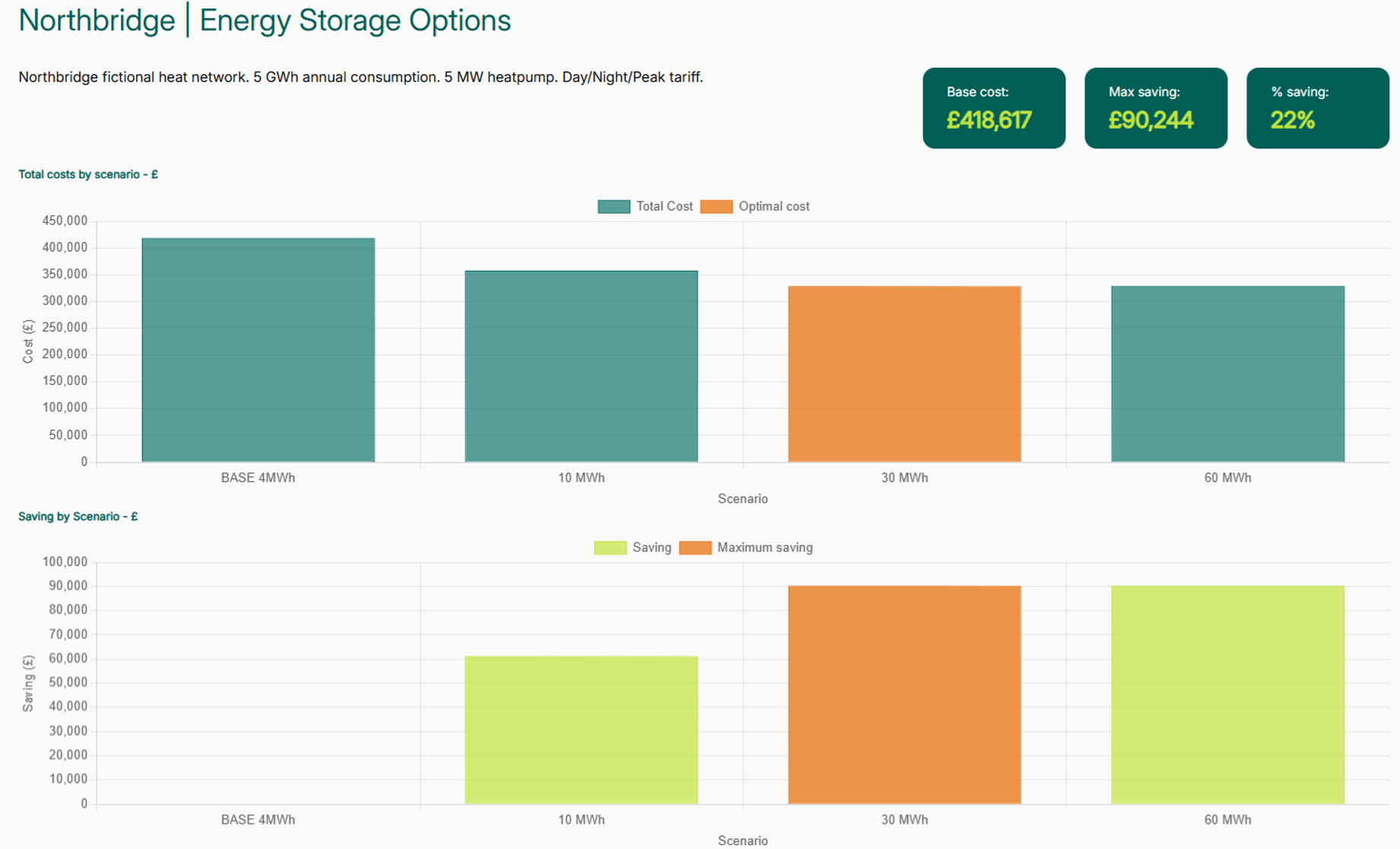
This fictional heat network operates on a simple day / night / peak tariff and has limited heat storage on site. The scenario explores the value of adding different amounts of heat storage, showing diminishing returns.
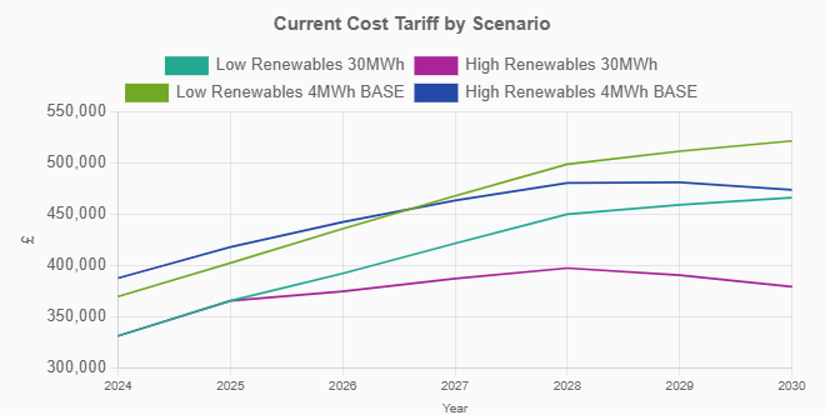
The value of storage is also explored under different long-term pricing scenarios which are built into Lark.
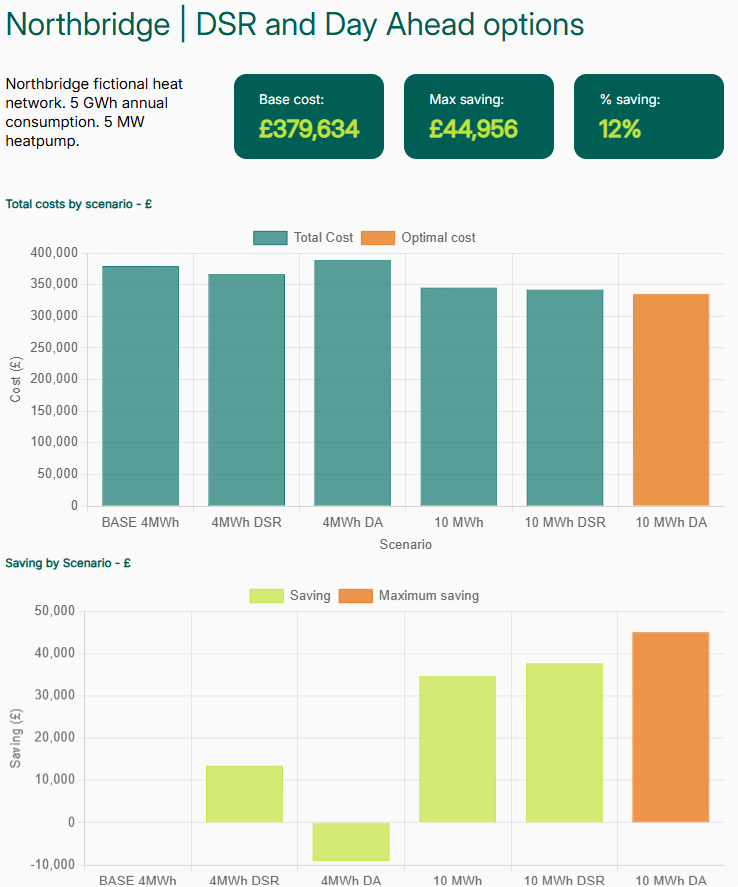
Demand-side response and flexible tariff options, and their interaction with heat storage, can be explored.
Lark has a range of built-in, long-term price scenarios reflecting a range of tariffs and market conditions, alongside matching temperature, demand and generation profiles.
Explore future operational costs and savings using realistic tariff, demand-side response, demand and generation datasets with self-consistent scenarios running to 2030.
Start a conversation
Explore the value of heat storage and flexibility.
Compare configurations and future electricity scenarios using Lark.